
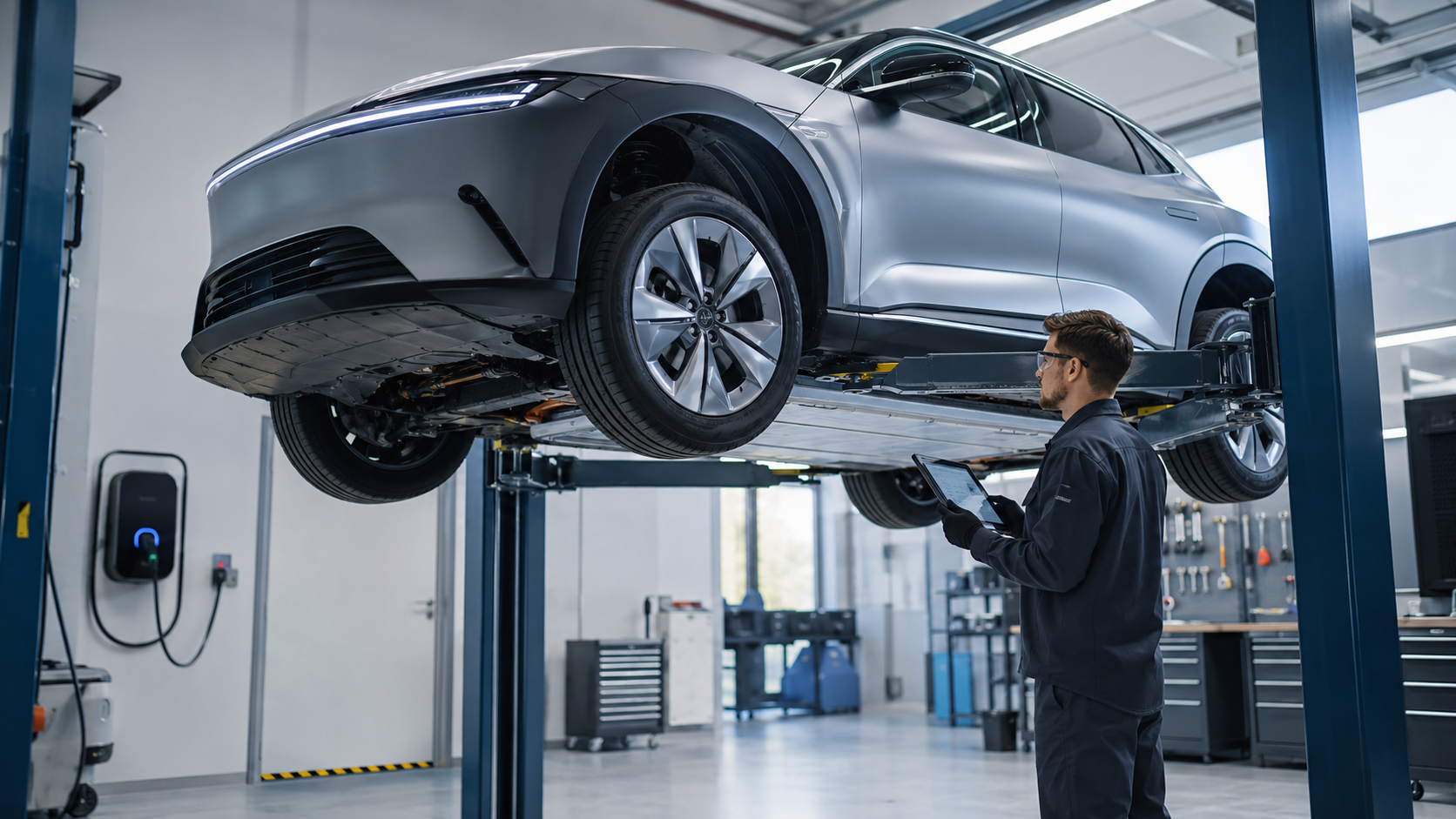
Electric car battery replacement cost usually falls between $5,000 and $25,000 before warranty coverage, depending on the vehicle, battery size, chemistry, labor and whether the repair requires a complete pack or only individual modules. Most EV owners will never pay that full amount. Battery failures are uncommon, warranties often cover early defects, and a qualified shop may be able to repair a module, cooling component or control system instead of replacing the entire pack.
This guide explains what a traction-battery replacement can cost in 2026, why estimates vary so widely, how warranty and insurance affect your bill, and how to make a sensible repair-or-replace decision. The figures are planning ranges, not VIN-specific quotes. Always request a written diagnosis and estimate for your exact vehicle.
Electric Car Battery Replacement Cost at a Glance
The table below gives practical budgeting ranges for an out-of-warranty replacement. Prices can be lower for remanufactured packs and higher for large premium batteries, low-volume vehicles or repairs that require extensive labor.
| Vehicle or battery type | Typical planning range | What affects the price |
|---|---|---|
| Small older EV or compact pack | $5,000–$10,000 | Pack availability, refurbished options and usable capacity |
| Mainstream compact or midsize EV | $8,000–$18,000 | Battery capacity, labor and whether the pack is new or remanufactured |
| Large SUV, truck or premium EV | $15,000–$25,000+ | Very large pack, complex cooling system and higher parts cost |
| Module or component repair | Often less than a full pack | Fault location, parts availability and manufacturer repair policy |
| Warranty-covered defect | Potentially $0 for covered work | Age, mileage, diagnosis and warranty exclusions |
Published consumer estimates commonly place a complete replacement around $5,000 to $20,000, while large or luxury packs may exceed that range. A dealer quote can also include diagnostics, coolant, seals, programming, taxes and a refundable or nonrefundable core charge. Ask what is included before comparing two estimates.
How to Estimate Electric Car Battery Replacement Cost
A useful planning formula is:
replacement estimate = battery capacity × estimated pack cost per kWh + labor + diagnostics – warranty contribution or core credit
For example, imagine a 60 kWh pack and use $120 per kWh only as a simple illustration:
60 kWh × $120 = $7,200
If labor is $1,500 and diagnostics are $300:
$7,200 + $1,500 + $300 = $9,000 before taxes, warranty coverage or a core credit
This calculation is not a retail quote. Battery-industry pack prices describe manufacturing economics, while an owner pays for a finished service part, shipping, hazardous-material handling, software work, shop labor and the manufacturer’s parts channel. The same-capacity battery can therefore cost very different amounts in two vehicles.
Why EV Battery Replacement Prices Vary
1. Battery capacity
Electric car battery replacement cost rises with pack size, because a larger battery contains more cells and materials. A short-range city car may use a comparatively small pack, while an electric pickup or long-range SUV may carry well over 100 kWh. Capacity is one of the strongest cost drivers, but it is not the only one.
2. Full pack versus module repair
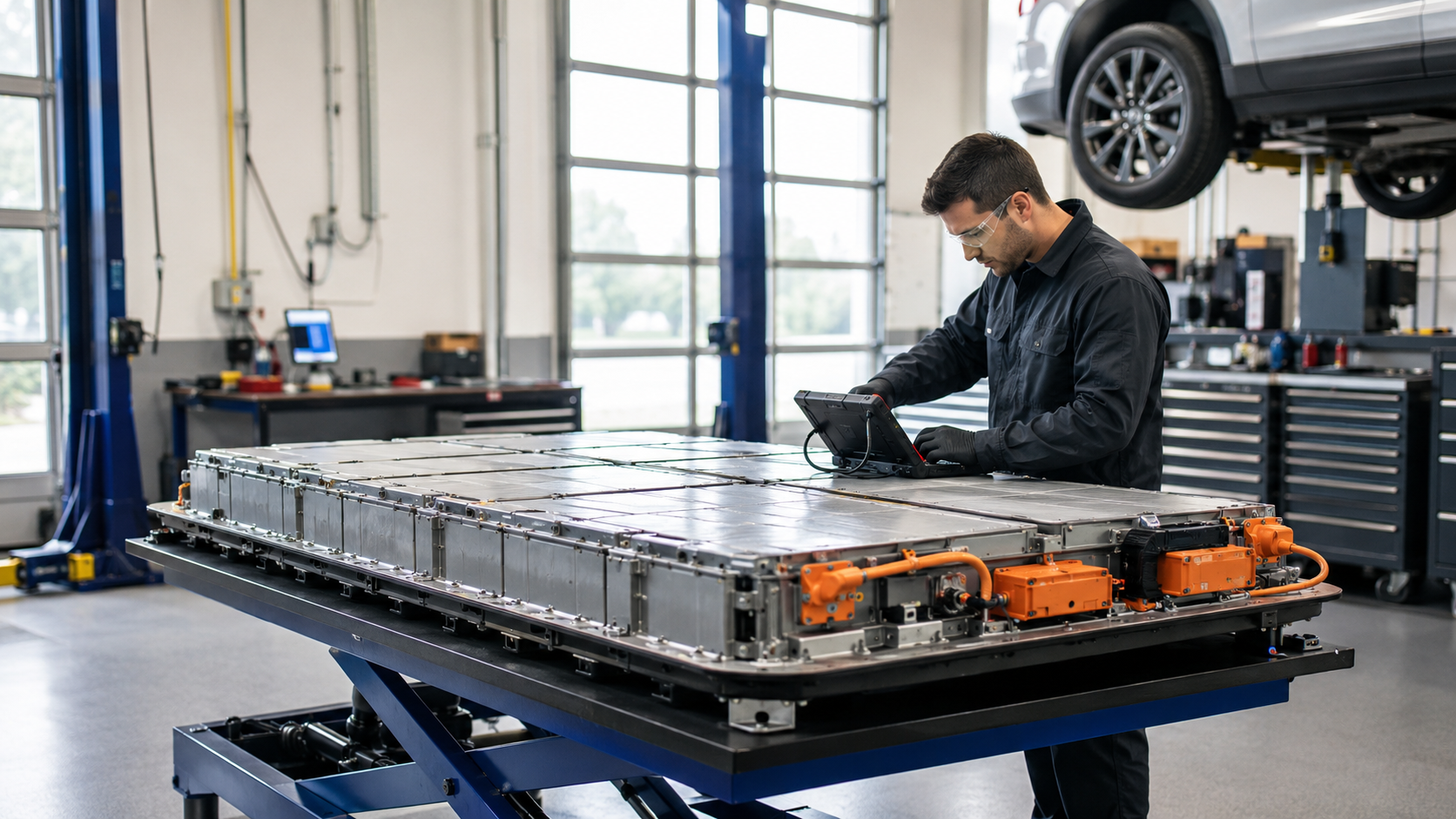
An EV battery is an assembly of cells, modules, cooling hardware, sensors, contactors, a case and a battery-management system. A warning light does not automatically mean every cell has failed. Some faults can be traced to a module, coolant leak, connector, sensor or control unit. Whether a manufacturer allows component-level repair greatly affects the final bill.
3. New, remanufactured or salvaged parts
A new original-equipment pack normally offers the clearest warranty and compatibility. A professionally remanufactured unit may cost less and can be a sensible option for an older car. A salvaged pack may be cheaper again, but its history, state of health, storage conditions and remaining warranty require careful verification. Never buy a high-voltage pack on price alone.
4. Labor and shop capability
Traction batteries weigh hundreds of pounds and require insulated tools, lifting equipment, safety procedures and trained technicians. Labor varies by region and vehicle design. Independent EV specialists may offer alternatives that a dealership does not, but the shop should document technician qualifications, parts provenance and repair warranty.
5. Supply, shipping and core charges
Older or low-volume vehicles can have limited parts availability. High-voltage batteries are also expensive to transport. A core charge may be credited when the old pack is returned for remanufacturing or recycling, so confirm whether the quoted total includes that credit.
How Often Do Electric Car Batteries Actually Fail?
Complete battery failure is much less common than many shoppers assume. A 2024 U.S. Department of Energy fact based on Recurrent’s study of about 15,000 model-year 2011–2023 plug-in vehicles reported a 1.5% replacement rate due to failure outside recalls. For model years 2016–2023, the rate was well below 1%. The DOE also noted that many replacements would have occurred under warranty.
That evidence does not mean every battery will last forever. It shows why purchase decisions should consider both failure risk and gradual capacity loss. An aging battery may still operate reliably while delivering less range than when new. Range loss alone does not necessarily justify a complete replacement.
Source: U.S. Department of Energy analysis of plug-in vehicle battery replacements.
Battery Degradation Is Not the Same as Failure
Degradation means the pack stores less energy over time. Failure means a defect prevents safe or normal operation. Drivers often notice degradation as reduced usable range, especially in cold weather, but seasonal range changes can also come from cabin heating, tire pressure, speed and driving conditions.
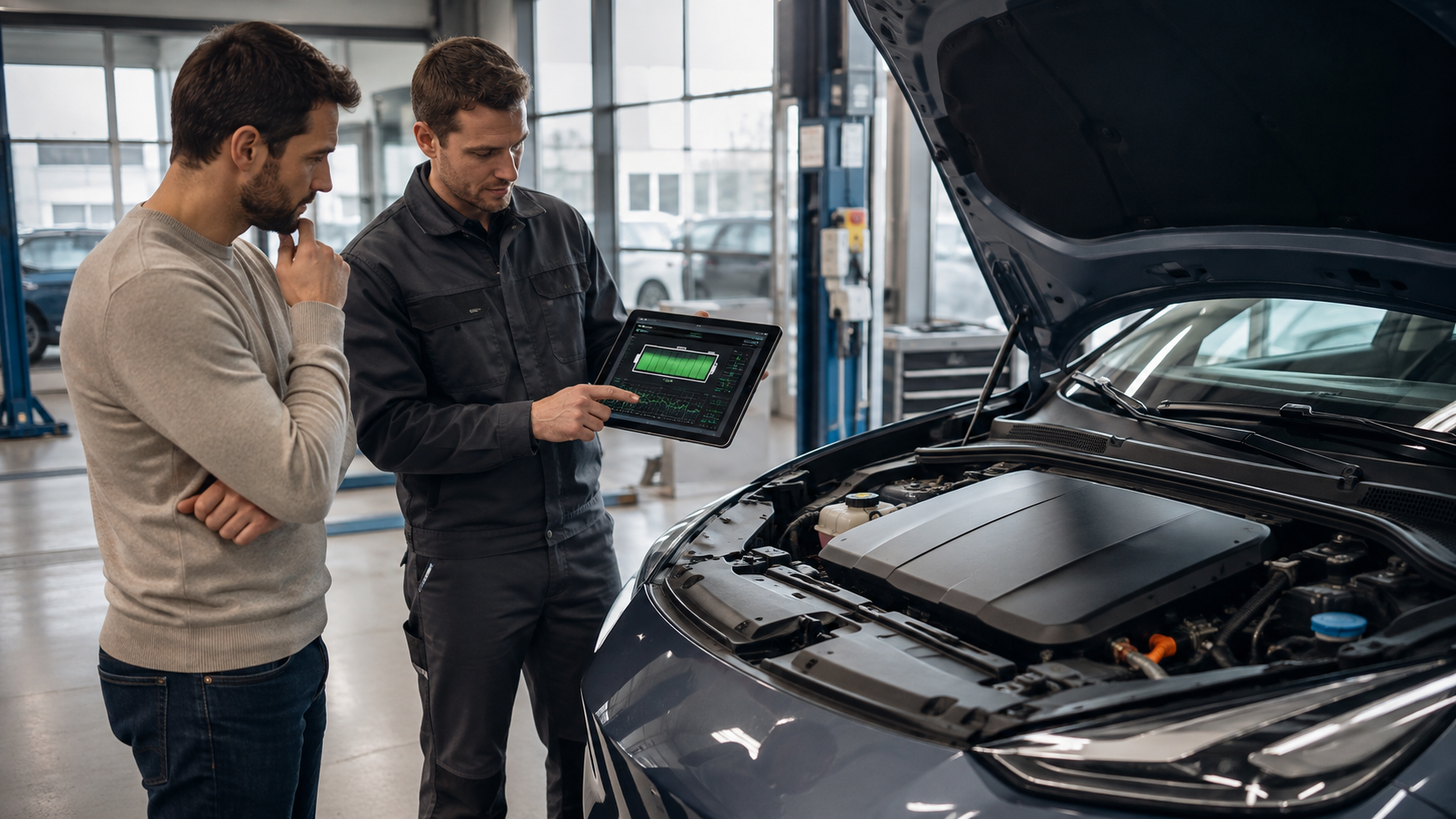
Before authorizing an electric car battery replacement, ask the technician for a state-of-health report, fault codes, cell or module imbalance data, usable capacity and a written explanation of the failed component. A trustworthy diagnosis separates normal aging from a repairable fault.
Will the EV Battery Warranty Pay?
Electric car battery replacement cost may be reduced to zero for covered defects. Review the battery warranty booklet tied to your model year and market. Many manufacturers provide a separate high-voltage battery warranty with time and mileage limits. Some cover defects only, while others also promise a minimum retained capacity during the warranty period. Terms, transferability, exclusions and measurement methods differ.
Warranty coverage may be denied when damage results from a collision, flooding, unauthorized modification, improper lifting, neglected recall work or other excluded causes. Do not assume that a dashboard estimate of range proves a capacity-warranty claim. The manufacturer may require its own diagnostic procedure.
Before paying out of pocket, collect the VIN, in-service date, current mileage, service records and diagnostic report. Ask the manufacturer or dealer to confirm the applicable battery warranty in writing.
Does Car Insurance Cover Battery Replacement?
Insurance generally does not pay for ordinary wear, age-related degradation or a mechanical failure. It may cover a traction battery damaged by a covered collision, fire, theft-related event or other insured peril, subject to the policy, deductible and valuation rules. Manufacturer defects and recalls belong to the warranty or recall process, not routine collision coverage.
If damage follows an accident, do not approve major work before the insurer inspects the vehicle. Battery-case damage can also influence whether the vehicle is repaired or declared a total loss.
Warning Signs That Need Professional Diagnosis
- A high-voltage system or battery warning remains illuminated.
- Usable range drops suddenly rather than gradually.
- The car will not charge, stops charging repeatedly or limits power.
- The displayed state of charge changes abnormally fast.
- Cooling-system faults, unusual odors, smoke or excessive heat appear.
- The vehicle reports isolation, cell-imbalance or battery-management faults.
If you see smoke, hear popping sounds, smell a sharp chemical odor or notice unusual heat after a collision or charging event, move away from the vehicle and contact emergency services. Do not touch exposed high-voltage components.
Full Replacement, Repair or Another Vehicle?
When judging whether an electric car battery replacement cost is reasonable, compare the total repair with the car’s post-repair value, not simply its original purchase price. A $9,000 battery in a car worth $7,000 after repair is difficult to justify unless the vehicle has exceptional value to you. The same repair in a newer car worth $25,000 may be rational.
Use this decision checklist:
- Get a battery-specific diagnostic report.
- Confirm warranty, recall and insurance possibilities.
- Request separate prices for module repair, remanufactured pack and new pack when available.
- Check the warranty offered on each repair option.
- Estimate the vehicle’s value after a successful repair.
- Compare the net repair cost with replacement-vehicle costs, taxes and financing.
If you are comparing alternatives, TechieWall’s guide to electric cars under $30K can help frame the replacement-vehicle side of the decision. Buyers considering smaller vehicles can also review the adult electric car and microcar buying guide for important road-use and safety distinctions.
How to Reduce Electric Car Battery Replacement Cost
Check every form of coverage
The first way to lower electric car battery replacement cost is to check every available benefit. Look for the original battery warranty, an extended service contract, a certified-used warranty, recall campaigns, goodwill assistance and relevant insurance coverage. A dealer should check the VIN for open campaigns rather than relying on a general model description.
Get a second EV-qualified diagnosis
A second diagnosis can prevent an unnecessary electric car battery replacement cost. A second opinion is especially valuable when the first recommendation is a complete pack. Ask both shops for the exact fault code, failed part, pack state of health and itemized estimate. The cheapest quote is not automatically the best if the part has an unknown history or little warranty.
Ask about remanufactured assemblies
For an older vehicle, a tested remanufactured pack can balance cost and remaining service life. Ask about usable capacity, balancing, replaced components, test documentation and written coverage. A vague “reconditioned” label without data is not enough.
Maintain the systems around the battery
Follow the manufacturer’s cooling-system and software guidance, complete recalls promptly and avoid physical damage to the underbody. Normal charging habits vary by chemistry, so use the vehicle maker’s recommendations instead of universal internet rules. Good care cannot prevent every defect, but it can reduce avoidable stress.
What Happens to the Old EV Battery?
Recycling and core credits are another part of electric car battery replacement cost. A removed battery is not ordinary household waste. Depending on its condition, it may be repaired, remanufactured, reused for stationary energy storage or sent to a specialist recycler. The objective is to recover valuable materials and reduce the need for newly mined inputs.
The U.S. Department of Energy describes programs intended to expand collection, transportation, processing and recycling infrastructure. Redwood Materials has reported recovery of more than 95% of critical battery materials in its recycling process, although actual recovery depends on the process and facility. Ask the repairer how the core will be transported and handled.
Learn more from the U.S. Department of Energy battery and electric-vehicle overview.
Used EV Battery Checklist
Potential electric car battery replacement cost makes battery health especially important to a used-EV buyer. A used electric car can be excellent value, but its battery condition matters more than the odometer alone. Before buying:
- Obtain the VIN and verify the original in-service date.
- Read the exact battery-warranty terms for that model year.
- Request a state-of-health or usable-capacity report.
- Check for recall history and completed campaign work.
- Inspect the underbody for impact or lifting damage.
- Test both AC and DC charging when practical.
- Compare displayed range under similar temperature and charge conditions.
- Ask whether the battery has been repaired or replaced and retain the invoice.
Do not treat a short test drive or dashboard range guess as a complete battery assessment. A pre-purchase inspection by an EV-qualified technician can reveal issues that a conventional inspection misses.
Electric Car Battery Replacement Cost FAQs
How much does it cost to replace an electric car battery in 2026?
A practical out-of-warranty planning range is about $5,000 to $25,000. Small or remanufactured packs may cost less, while large premium batteries can cost more. A VIN-specific written quote is the only reliable price for a particular car.
Is replacing an EV battery worth it?
It can be worth it when the vehicle’s post-repair value comfortably exceeds the net repair cost and the rest of the car is in good condition. Compare a new pack, remanufactured pack, module repair and replacement vehicle before deciding.
How long does an electric car battery last?
There is no single lifespan for every EV. Climate, chemistry, thermal management, charging, mileage and manufacturing quality all matter. Complete failures are uncommon in newer vehicles, while gradual capacity loss is expected over time.
Can individual EV battery modules be replaced?
Sometimes. It depends on pack design, manufacturer procedures, parts availability and the shop’s capability. Module replacement must address balancing, sealing, cooling and safety, not merely swap a visibly weak part.
Does insurance cover an EV battery?
Insurance may cover battery damage caused by an insured event such as a collision, but it usually excludes normal degradation and mechanical wear. Coverage depends on the specific policy and cause of loss.
What is the cheapest safe replacement option?
The lowest responsible cost often comes from warranty coverage, a properly diagnosed component repair or a documented remanufactured pack. An unverified salvaged battery may create safety, compatibility and longevity risks that erase the initial savings.
Bottom Line
Electric car battery replacement cost is usually quoted in a broad $5,000–$25,000 range, but the amount an owner actually pays can be far lower when a warranty, recall, insurance claim, module repair or core credit applies. Start with a high-voltage battery diagnosis, verify every form of coverage, and compare itemized repair options. A complete-pack quote should be a decision point, not the end of the investigation.
Editorial note: Cost ranges are planning estimates based on publicly available 2024–2026 industry information. Prices, warranties and repair procedures change by country, model year and vehicle configuration. This article was reviewed for clarity and updated for 2026; it does not replace a manufacturer or qualified technician’s diagnosis.
Pingback: How Far Can an Electric Car Go on One Charge? Best 2026 Guide
Pingback: Do Electric Cars Need Oil Changes? Best 2026 Guide