
How to check ev battery health is easier to understand when you separate the headline answer from the variables that change it. This guide gives you a direct answer, a repeatable method, realistic limitations and practical checks you can use in 2026.
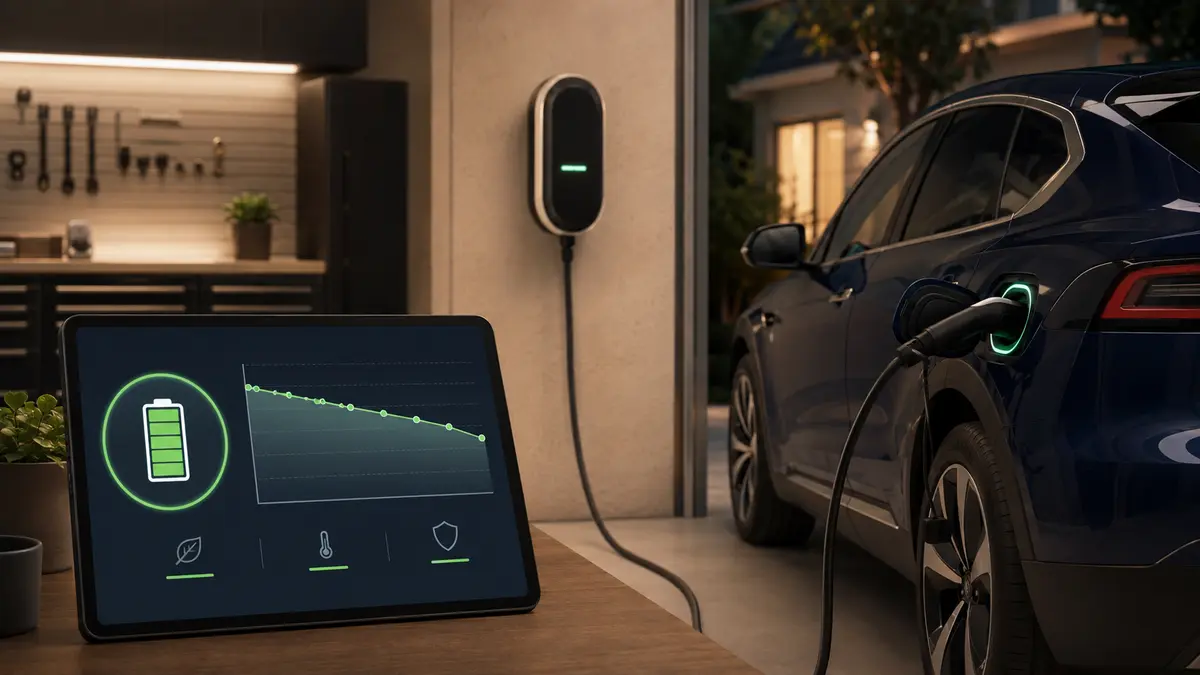
Start with a model-specific battery health report, then compare displayed range with temperature, charge level and recent efficiency. Verify warranty status, charging behavior, recall completion and the underside of the battery enclosure before purchase. The purpose is not to force every reader into one answer. It is to show what to verify, how to calculate or compare it, and where uncertainty remains.
How to check ev battery health: quick answer
Start with a model-specific battery health report, then compare displayed range with temperature, charge level and recent efficiency. Verify warranty status, charging behavior, recall completion and the underside of the battery enclosure before purchase.
| Decision point | What to verify | Why it matters |
|---|---|---|
| 1 | state of health from a compatible diagnostic tool | It can materially change the real-world answer and should be checked before you spend money or make a commitment. |
| 2 | usable capacity compared with original specification | It can materially change the real-world answer and should be checked before you spend money or make a commitment. |
| 3 | range estimate under known conditions | It can materially change the real-world answer and should be checked before you spend money or make a commitment. |
| 4 | fast-charging curve and error messages | It can materially change the real-world answer and should be checked before you spend money or make a commitment. |
| 5 | battery warranty balance and service history | It can materially change the real-world answer and should be checked before you spend money or make a commitment. |
What the answer means in practice
Search results often compress a complicated decision into one sentence. That is helpful for orientation but incomplete for planning. The useful answer combines a baseline, the conditions behind it and a safety or budget margin. This is especially important because specifications, electricity rates, warranties, tax rules, product software and hiring expectations can change.
Use a range when the input is uncertain. A transparent estimate is more useful than a precise-looking number built on the wrong assumptions. If another person cannot reproduce your result from the information you recorded, the estimate needs better documentation.
Key factors that change how to check ev battery health
1. State of health from a compatible diagnostic tool
how to check ev battery health depends heavily on state of health from a compatible diagnostic tool. Treat this as a decision input, not an isolated specification. Compare like with like, record the conditions behind every number, and use the vehicle, employer or training provider documentation that applies to your exact situation. A small difference can change the practical result when it compounds across a month, a long trip, a warranty claim or a job search.
For a reliable assessment, verify this point with current records and a real-world test whenever possible. Marketing summaries are useful for orientation, but the underlying rate, equipment limit, policy, diagnostic result or job requirement is what should drive the decision. Write down your assumption so you can revise the calculation when conditions change.
2. Usable capacity compared with original specification
how to check ev battery health depends heavily on usable capacity compared with original specification. Treat this as a decision input, not an isolated specification. Compare like with like, record the conditions behind every number, and use the vehicle, employer or training provider documentation that applies to your exact situation. A small difference can change the practical result when it compounds across a month, a long trip, a warranty claim or a job search.
For a reliable assessment, verify this point with current records and a real-world test whenever possible. Marketing summaries are useful for orientation, but the underlying rate, equipment limit, policy, diagnostic result or job requirement is what should drive the decision. Write down your assumption so you can revise the calculation when conditions change.
3. Range estimate under known conditions
how to check ev battery health depends heavily on range estimate under known conditions. Treat this as a decision input, not an isolated specification. Compare like with like, record the conditions behind every number, and use the vehicle, employer or training provider documentation that applies to your exact situation. A small difference can change the practical result when it compounds across a month, a long trip, a warranty claim or a job search.
For a reliable assessment, verify this point with current records and a real-world test whenever possible. Marketing summaries are useful for orientation, but the underlying rate, equipment limit, policy, diagnostic result or job requirement is what should drive the decision. Write down your assumption so you can revise the calculation when conditions change.
4. Fast-charging curve and error messages
how to check ev battery health depends heavily on fast-charging curve and error messages. Treat this as a decision input, not an isolated specification. Compare like with like, record the conditions behind every number, and use the vehicle, employer or training provider documentation that applies to your exact situation. A small difference can change the practical result when it compounds across a month, a long trip, a warranty claim or a job search.
For a reliable assessment, verify this point with current records and a real-world test whenever possible. Marketing summaries are useful for orientation, but the underlying rate, equipment limit, policy, diagnostic result or job requirement is what should drive the decision. Write down your assumption so you can revise the calculation when conditions change.
5. Battery warranty balance and service history
how to check ev battery health depends heavily on battery warranty balance and service history. Treat this as a decision input, not an isolated specification. Compare like with like, record the conditions behind every number, and use the vehicle, employer or training provider documentation that applies to your exact situation. A small difference can change the practical result when it compounds across a month, a long trip, a warranty claim or a job search.
For a reliable assessment, verify this point with current records and a real-world test whenever possible. Marketing summaries are useful for orientation, but the underlying rate, equipment limit, policy, diagnostic result or job requirement is what should drive the decision. Write down your assumption so you can revise the calculation when conditions change.
6. Physical damage, corrosion or flood history
how to check ev battery health depends heavily on physical damage, corrosion or flood history. Treat this as a decision input, not an isolated specification. Compare like with like, record the conditions behind every number, and use the vehicle, employer or training provider documentation that applies to your exact situation. A small difference can change the practical result when it compounds across a month, a long trip, a warranty claim or a job search.
For a reliable assessment, verify this point with current records and a real-world test whenever possible. Marketing summaries are useful for orientation, but the underlying rate, equipment limit, policy, diagnostic result or job requirement is what should drive the decision. Write down your assumption so you can revise the calculation when conditions change.
A practical step-by-step method
- Step 1: Identify the exact battery variant. Do this with current, model-specific or role-specific information. Save the result and the date checked; this creates an evidence trail and prevents a decision based on a stale estimate.
- Step 2: Request a fully charged test drive. Do this with current, model-specific or role-specific information. Save the result and the date checked; this creates an evidence trail and prevents a decision based on a stale estimate.
- Step 3: Read diagnostic data with compatible equipment. Do this with current, model-specific or role-specific information. Save the result and the date checked; this creates an evidence trail and prevents a decision based on a stale estimate.
- Step 4: Test AC and DC charging when practical. Do this with current, model-specific or role-specific information. Save the result and the date checked; this creates an evidence trail and prevents a decision based on a stale estimate.
- Step 5: Inspect the underbody and charge port. Do this with current, model-specific or role-specific information. Save the result and the date checked; this creates an evidence trail and prevents a decision based on a stale estimate.
- Step 6: Obtain a pre-purchase inspection from an EV-qualified technician. Do this with current, model-specific or role-specific information. Save the result and the date checked; this creates an evidence trail and prevents a decision based on a stale estimate.
Example decision framework
| Scenario | Good approach | Warning sign |
|---|---|---|
| Conservative | Uses verified inputs and a margin for uncertainty. | Assumes best-case conditions. |
| Balanced | Compares cost, time, reliability and future needs. | Optimizes only for the purchase price or headline number. |
| High-risk | Pauses until safety, warranty or qualification questions are resolved. | Proceeds despite damage, missing records or unclear requirements. |
Common mistakes and how to avoid them
Using a national average as a personal answer
Averages are a starting point. Local rates, climate, equipment, model year, employer needs and personal usage can be different. Replace the average with your own documented input as soon as possible.
Ignoring the date and conditions
A number without a date, test method or location is difficult to trust. Record when and how it was obtained. For published specifications, read the footnotes and verify that the model or credential version matches.
Optimizing one metric
Low cost can bring slower performance, limited compatibility or less support. Maximum speed can bring higher installation cost, heat, wear or complexity. Choose the option that works across the complete use case.
Skipping professional inspection
When electrical safety, a high-value vehicle, collision damage, battery health or a career-changing expense is involved, qualified professional advice can be worth far more than its fee.
How to make the result more reliable
Create a small evidence pack: the original source, current date, screenshots or service records, assumptions and your calculation. Compare at least two scenarios. Then test the decision against a realistic bad case: a colder day, a higher rate, a delayed repair, a failed exam or a job listing with stricter requirements.
Revisit the answer after real use. Owners can compare actual energy, maintenance or range data with the estimate. Career changers can compare job-response rates and interview feedback with the original plan. The feedback loop turns a generic guide into a personal decision system.
Safety, limitations and when to get help
This article provides general education, not electrical, mechanical, legal, financial or employment guarantees. Follow current manufacturer instructions, building codes, warranty documents and workplace requirements. Stop using damaged or flood-exposed electrical equipment. Do not open a high-voltage battery pack. Use a licensed electrician for fixed charging work and an EV-qualified technician for high-voltage diagnosis.
Career pathways also vary by country and employer. A certificate may help demonstrate knowledge, but experience, communication, projects and local demand determine outcomes. Treat salary and hiring statistics as context rather than a promise.
Related TechieWall guides
- Electric car battery replacement cost
- How long electric car batteries last
- How long it takes to charge a Tesla
- Best electric cars under $30K
Authoritative source
For current definitions and safety guidance, consult National Highway Traffic Safety Administration. Always confirm the exact vehicle, equipment, warranty, credential or role requirements that apply to you.
Frequently asked questions
What is the short answer?
Start with a model-specific battery health report, then compare displayed range with temperature, charge level and recent efficiency. Verify warranty status, charging behavior, recall completion and the underside of the battery enclosure before purchase.
What is the biggest mistake to avoid?
Do not make the decision from one headline number. Confirm the assumptions, limits, warranty terms, local prices or job requirements that apply to you.
How often should I recheck the information?
Recheck whenever prices, software, weather, equipment, policy, warranty status or your target role changes. For a purchase or application, verify immediately before committing.
Is the cheapest option always best?
No. Reliability, safety, time, compatibility, support and long-term cost often matter more than the lowest upfront figure.
Which source should I trust?
Start with the applicable manufacturer or employer documentation and an authoritative public source. Use independent testing as a cross-check, and note the date and conditions.
how to check ev battery health requires a current, evidence-based comparison. Recheck how to check ev battery health before committing, and document the assumptions behind how to check ev battery health.
Bottom line
Start with a model-specific battery health report, then compare displayed range with temperature, charge level and recent efficiency. Verify warranty status, charging behavior, recall completion and the underside of the battery enclosure before purchase. Start with the documented baseline, replace averages with personal inputs, keep a sensible margin and verify the result before making a costly or safety-critical decision. That approach makes how to check ev battery health a practical question you can answer with evidence rather than guesswork.