
The importance of automobile industry in USA reaches far beyond the cars and trucks sold at a dealership. It connects manufacturing, engineering, software, logistics, retail, maintenance, energy and public safety. This updated guide explains why the importance of automobile industry in USA remains central to American jobs, innovation and global trade.
At a glance
- The United States produced 10.6 million motor vehicles and recorded 16.3 million vehicle sales in 2024, according to SelectUSA.
- U.S. motor-vehicle and parts manufacturing employed about 963,000 people in August 2026, while motor-vehicle and parts dealers employed about 2.05 million, according to the Bureau of Labor Statistics.
- Automotive activity also supports suppliers, repair businesses, transport companies and local tax bases.
1. It supports jobs across a large supply chain
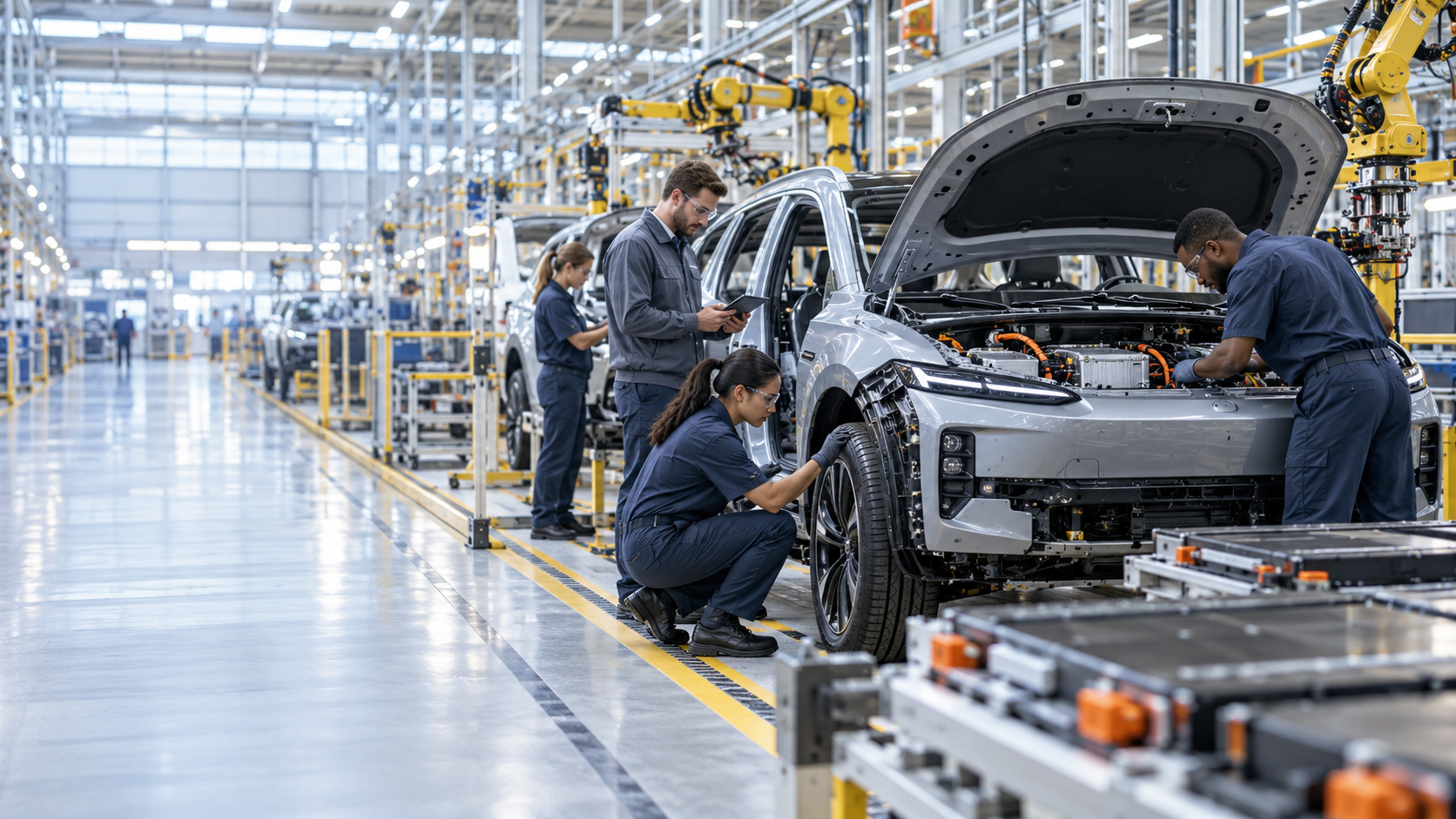
Vehicle assembly is only the visible centre of the industry. A single vehicle relies on metalworking, plastics, glass, semiconductors, batteries, software, tyres, freight, finance, dealerships and service technicians. That is why employment should not be measured only at assembly plants. The BLS automotive-industry analysis includes manufacturing, wholesaling, retailing and maintenance-related activity, while SelectUSA reports that the automotive cluster employs more than one million people.
2. It anchors regional manufacturing
Auto plants and supplier networks can create long-term demand for skilled trades, engineering, quality control and logistics. The benefits are strongest when communities also invest in training, reliable transport, housing and local supplier capability. SelectUSA identifies Alabama, Indiana, Kentucky, Michigan and Ohio as states with high automotive employment concentration, but the supply chain is national.
3. It drives exports and investment
Vehicles and parts are a major part of U.S. trade. International automakers exported 751,000 U.S.-built vehicles in 2025, according to Autos Drive America. Export capacity matters because it spreads demand beyond the domestic sales cycle and encourages manufacturers to keep improving quality, productivity and supplier resilience.
4. It accelerates innovation
The modern car is a mobile technology platform. Automakers and suppliers invest in batteries, power electronics, software, sensors, connectivity, lightweight materials and manufacturing automation. That investment creates transferable skills and technologies. But innovation should be judged by real safety, durability, repairability and energy outcomes—not by marketing labels.
5. It shapes safety and mobility
Automotive advances can prevent crashes and expand mobility, but drivers should understand their limits. NHTSA says that current consumer vehicles require a fully attentive driver, even when they offer advanced assistance features. Technologies such as automatic emergency braking, lane warnings and adaptive cruise control are assistance systems, not a substitute for safe driving.
6. It is central to the energy transition
Electric, hybrid and more efficient combustion vehicles are changing the industry’s workforce and infrastructure needs. The transition requires charging networks, grid planning, battery-material supply chains, technician training and recycling capacity. A successful shift must make transport cleaner while keeping vehicles safe, reliable and accessible to households and businesses.
Challenges the industry must address
- Supply-chain resilience: critical components and materials can disrupt production.
- Workforce transition: employers and schools need pathways into EV, software and advanced-manufacturing roles.
- Affordability: innovation only has broad economic value if people and fleets can use it.
- Cybersecurity and privacy: connected vehicles must protect systems and drivers.
- Safety: new technologies need transparent testing and responsible deployment.
Why it matters to consumers
The industry affects the price, safety, repairability and running cost of a vehicle. When comparing a car, look beyond the monthly payment: check safety ratings, warranty coverage, fuel or charging costs, insurance, recall history and service availability. For more practical buying guidance, see our car technology guides.
The importance of automobile industry in USA is visible in the jobs, supplier networks and mobility choices that affect communities every day. Understanding the importance of automobile industry in USA helps consumers and policymakers assess these changes with context.
FAQ
Why is the automobile industry important to the U.S. economy?
It supports employment, capital investment, exports, supply chains and local businesses across manufacturing, retail and repair.
Does the industry include dealerships and repair shops?
Yes. A useful economic view includes production as well as wholesale, retail, maintenance and the companies that supply them.
Are self-driving cars available to buy?
No vehicle sold to consumers in the United States is fully automated. Drivers remain responsible for operating today’s consumer vehicles safely.
Sources
This article uses current public data from SelectUSA, the U.S. Bureau of Labor Statistics, and NHTSA. Figures change over time; verify primary data for decisions requiring precision.