
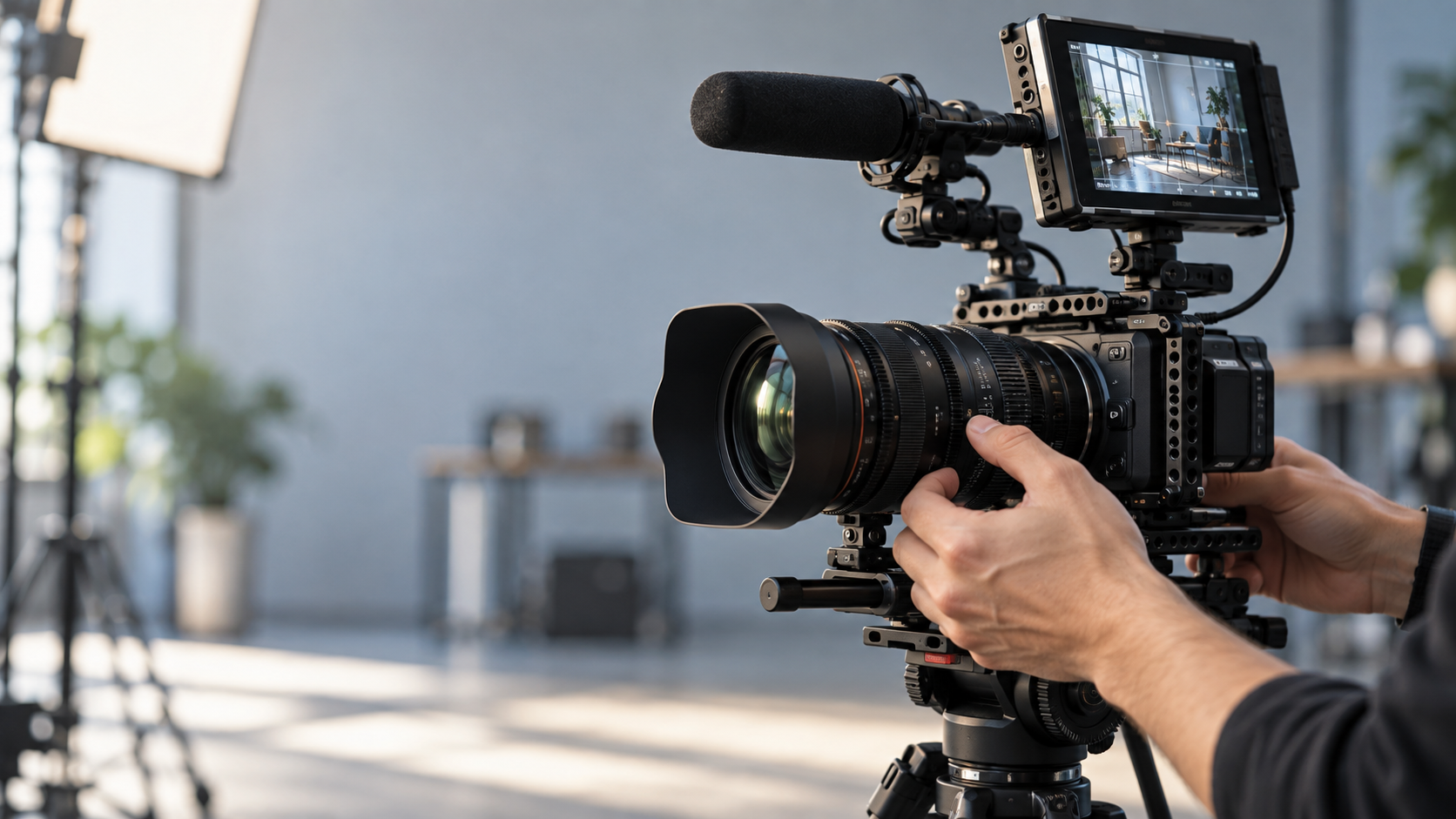
Choosing the best professional video camera is less about chasing the largest resolution and more about matching a camera to your real workflow: the light you shoot in, the lenses you can afford, the audio you need, and the files your computer can edit. This updated guide compares seven capable options. Comparing a best professional video camera means considering the complete working kit for filmmakers, creators, interview teams, and small productions.
Quick picks
- Best overall hybrid: Panasonic Lumix S5IIX
- Best affordable cinema body: Sony FX30
- Best for cinematic RAW workflows: Blackmagic Cinema Camera 6K
- Best compact creator camera: DJI Osmo Pocket 3
- Best for long events: Canon XA75
- Best full-frame value: Nikon Z6 III
- Best premium all-rounder: Canon EOS R5 Mark II
How we chose these professional video cameras
A professional tool should make a shoot more dependable, not merely make a specification sheet longer. We prioritised reliable autofocus where it matters, 10-bit recording for flexible colour work, usable stabilisation, clean audio options, heat management, lens availability and total system cost. Prices and bundles change frequently, so treat this as a workflow guide rather than a price list.
1. Panasonic Lumix S5IIX — best overall professional video camera
The S5IIX is a strong choice for a one-person production because it combines a full-frame sensor, phase-detect autofocus, internal 10-bit 4:2:2 recording, open-gate capture, V-Log and serious recording options. Its L-Mount ecosystem is shared with Leica and Sigma, which can make building a practical lens kit less expensive. Choose it if you need a camera that can cover interviews, social clips, commercial B-roll and stills without forcing you into a large rig. A best professional video camera should also fit the operator, accessories and turnaround your work demands.
Best for: freelancers and small agencies. Watch for: add fast media and spare batteries to the real budget.
2. Sony FX30 — best Super 35 cinema-style option
Sony’s FX30 is built around a Super 35 sensor and the E-mount lens system. It offers 10-bit 4:2:2 recording, S-Log3/S-Cinetone profiles and 4K up to 120p in supported modes. The compact cinema-body design, dependable continuous autofocus and deep lens selection make it an especially sensible first dedicated video body. Sony’s published specifications list 4K 120p recording and 14+ stops in S-Log3, but crop, media and heat behaviour should always be checked for the exact mode you plan to use.
Best for: narrative shorts, weddings and creator teams. Watch for: budget for a lens, ND solution and audio handle/adapter if your work needs XLR.
3. Blackmagic Cinema Camera 6K — best for controlled cinematic production
The Blackmagic Cinema Camera 6K puts image latitude and post-production flexibility first. Its full-frame 6K sensor, 12-bit Blackmagic RAW, dual-native ISO and CFexpress/USB-C recording are compelling for commercial, music-video and short-film work. The manufacturer specifies 13 stops of dynamic range, open-gate 6K capture and 6K 2.4:1 up to 60 fps. This is not the effortless run-and-gun pick: plan focus pulling, power and media carefully.
Best for: colour-managed, crewed or deliberate shoots. Watch for: autofocus and rigging expectations versus a hybrid camera.
4. DJI Osmo Pocket 3 — best compact B-camera for creators
A pocket gimbal camera is not a replacement for an interchangeable-lens cinema body, but it can be the most useful camera you actually carry. The Osmo Pocket 3 offers a stabilised, fast-to-deploy option for walk-and-talks, travel, behind-the-scenes footage and vertical deliverables. Use it as a B-camera, not as a false economy for shoots that require controlled lighting, long lenses or professional audio redundancy.
Best for: travel creators and supplementary moving shots. Watch for: small-camera low-light limits and fewer lens choices.
5. Canon XA75 — best professional camcorder for long-form coverage
A camcorder still solves a real problem: predictable long takes with a powered zoom, built-in ND filters, XLR audio and quick operator control. The Canon XA75 is suited to conferences, houses of worship, interviews and local events where framing and audio reliability outweigh a shallow-depth-of-field look. For multi-hour work, this integrated approach can be more economical than adapting a mirrorless kit.
Best for: events, education and corporate coverage. Watch for: a smaller sensor look than a full-frame interchangeable-lens system.
6. Nikon Z6 III — best full-frame value for hybrid shooters
The Z6 III gives hybrid shooters a full-frame body with modern video tools and a growing Z-mount lens range. It is a sensible choice if you need professional stills alongside 4K video, strong handling and a compact kit. Compare recording limits, codecs and your chosen lenses—not body price alone—before deciding between it and a cinema-focused alternative.
7. Canon EOS R5 Mark II — best premium hybrid for demanding work
For teams that need high-resolution stills and advanced video in one weather-resistant system, Canon’s EOS R5 Mark II is the premium option here. Its appeal is broad capability rather than low cost: fast autofocus, high-frame-rate recording and the RF lens ecosystem. It is most compelling when those stills and video demands occur on the same jobs; otherwise a less expensive dedicated video camera can be the smarter purchase.
What matters more than “4K”
Codec, bit depth and colour
For a quick turnaround, standard 8-bit files can be enough. For client work that may need grading, choose 10-bit 4:2:2 when possible. RAW creates more flexibility but increases storage, backup and editing demands. Test the whole workflow before a paid job.
Audio and monitoring
Bad audio ends trust faster than modest image noise. Budget for a quality microphone, headphones and—where needed—XLR inputs or an external recorder. A flip-out screen is useful; a bright external monitor is often better for critical focus and exposure.
Total system cost
Reserve budget for lenses, media, batteries, a tripod, ND filters, storage and backups. A $2,000 body can quickly become a $4,000 working kit.
Buying checklist
- Can it record your delivery format for the length of a typical shoot?
- Does its autofocus suit your subjects, or will you use manual focus?
- Do you need XLR audio, timecode, SDI or a powered zoom?
- Can your computer edit the chosen codec smoothly?
- Are lenses and service support available where you work?
Explore more practical technology guides to plan the rest of your production workflow.
The best professional video camera is the one that supports your subject, lighting plan, audio workflow and edit deadline. This guide helps you compare the best professional video camera options before investing in lenses and accessories.
FAQ
Is a mirrorless camera professional enough for video?
Yes—if its recording modes, audio path, heat management and lenses meet the job. Many professional productions mix mirrorless bodies, cinema cameras and camcorders.
Do I need 8K?
Usually no. 4K is the practical delivery format for most projects. Higher resolution can help with reframing, VFX or future-facing masters, but it raises media, heat and editing costs.
Which is the best professional video camera for beginners?
The Sony FX30 is a practical first cinema-style option; the Panasonic S5IIX is better if you also need full-frame stills. Choose based on lenses, audio needs and the type of work you intend to shoot. For most people, the best professional video camera is the one whose audio, lenses and recording format are reliable on every job.
Sources and update policy
Specifications should be confirmed with the manufacturer before purchase. Useful primary references include Sony FX30 specifications and Blackmagic Cinema Camera 6K technical specifications. We update recommendations when firmware, availability or meaningful competing models change.