
The electric car insurance cost question catches a lot of buyers off guard. EVs are famous for saving money on fuel and maintenance, but many owners are surprised to find their insurance premium is higher than what they paid for a comparable gas car. This guide breaks down exactly why electric car insurance costs more, what you can expect to pay by model, and the specific steps that actually lower your premium.
Average Electric Car Insurance Cost in 2026
On average, full coverage electric car insurance costs between $2,200 and $3,400 per year in the United States, roughly 15 to 30 percent more than the average gas vehicle. The exact electric car insurance cost depends heavily on the specific model, your driving record, location, and coverage level. Luxury EVs like the Rivian R1S or high-trim Tesla Model S can run $3,500 to $5,000 annually, while mass-market EVs like the Chevrolet Bolt or Nissan Leaf are often closer to $1,800 to $2,400.
Why Electric Cars Cost More to Insure
Several factors consistently push electric car insurance cost above what similar gas vehicles pay:
- Higher vehicle price: EVs generally cost more upfront than comparable gas models, and insurers price premiums partly on replacement value.
- Expensive battery repairs: Battery packs are the single costliest component to replace, and even minor collision damage near the battery can trigger a full pack replacement costing $15,000 or more.
- Specialized repair network: Fewer shops are certified to work on EVs, which limits competition and drives up labor costs, especially for less common models.
- Advanced tech and sensors: Cameras, radar, and driver-assist hardware built into bumpers and mirrors are costly to replace after minor fender-benders.
- Limited claims history: Newer EV models have less historical claims data for insurers to price against, so some carriers apply a risk premium until more data accumulates.
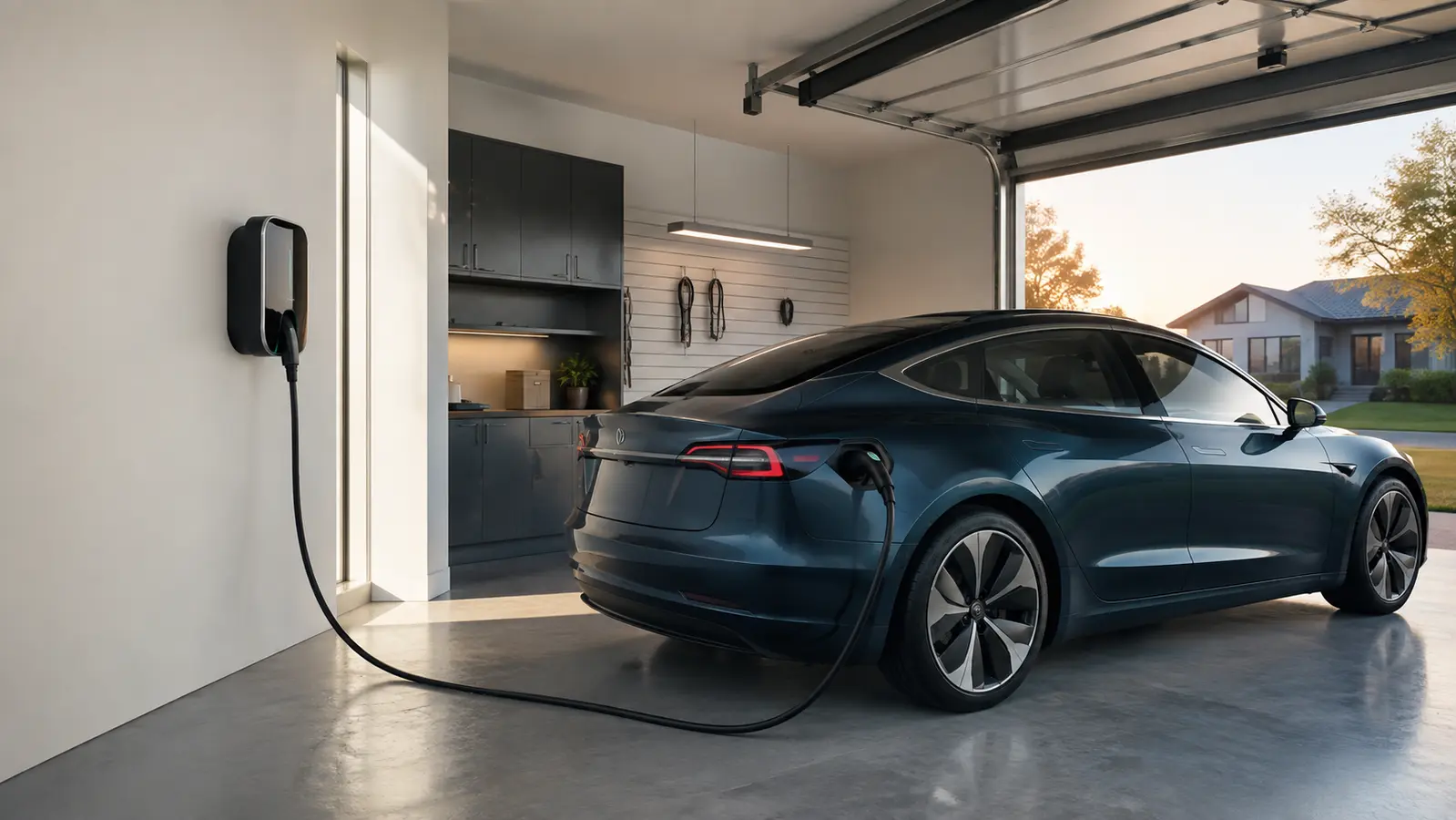
Electric Car Insurance Cost by Model
Here’s a general breakdown of what to expect for annual full-coverage premiums, though your actual electric car insurance cost will vary by state, driving history, and insurer:
- Nissan Leaf: $1,800–$2,300 per year
- Chevrolet Bolt EV/EUV: $1,900–$2,400 per year
- Tesla Model 3: $2,400–$3,000 per year
- Ford Mustang Mach-E: $2,300–$2,900 per year
- Tesla Model Y: $2,500–$3,100 per year
- Tesla Model S / Model X: $3,200–$4,200 per year
- Rivian R1T / R1S: $3,500–$5,000 per year
How to Lower Your Electric Car Insurance Cost
While EVs generally cost more to insure, there are concrete ways to bring your electric car insurance cost down:
- Shop multiple insurers. Premiums for the same EV can vary by 40 percent or more between carriers, since each prices EV risk differently.
- Ask about EV-specific discounts. Some insurers offer discounts for low annual mileage, home charging setups, or advanced safety features standard on most EVs.
- Raise your deductible. Moving from a $500 to a $1,000 deductible can cut your premium by 10–15 percent.
- Bundle policies. Combining auto with homeowners or renters insurance typically saves 5–25 percent.
- Maintain a clean driving record. This matters even more for EVs, since insurers weigh accident risk heavily given the high repair costs.
- Check for usage-based insurance. Telematics programs that track your driving can lower premiums significantly for low-mileage or cautious drivers.
- Confirm your car qualifies for any state EV insurance incentives. A small number of states and insurers offer green-vehicle discounts.
Comprehensive vs. Liability: What EV Owners Actually Need
Given the high cost of battery and sensor repairs, comprehensive and collision coverage are far more important for EV owners than for owners of older, lower-value gas cars. Dropping to liability-only coverage might lower your premium, but it also means you would be paying out of pocket for battery damage after an at-fault accident, a bill that can easily exceed $15,000. Most financial advisors recommend EV owners keep full coverage until the vehicle is at least several years old and its value has depreciated meaningfully.
Does Home Charging Affect Your Insurance?
Installing a home Level 2 charger does not typically affect your auto insurance premium directly, but it is worth mentioning to your homeowners insurer, since some require notification of major electrical installations. A small number of insurers offer bundled discounts for EV owners who install a certified home charging station, since it reduces reliance on public fast chargers and, statistically, correlates with lower overall risk profiles.
State-by-State Variation
Electric car insurance cost varies significantly by state due to differences in repair labor rates, accident frequency, and state minimum coverage requirements:
- Michigan, Florida, and Louisiana tend to have the highest overall auto insurance rates, which extends to EVs.
- Maine, Vermont, and Idaho generally offer the lowest average premiums nationwide.
- California has a large EV repair network, which helps offset otherwise high state insurance costs.
Frequently Asked Questions
Is electric car insurance cost always higher than gas cars?
Usually, yes, though the gap is narrowing as more EVs enter the market and insurers gather more claims data. Mass-market EVs like the Chevy Bolt or Nissan Leaf are now much closer to comparable gas vehicle premiums than early Tesla models were a few years ago.
Why is Tesla insurance so expensive?
Tesla models combine a high purchase price, expensive body panels, advanced sensor arrays, and, in some regions, a limited certified repair network, all of which push up electric car insurance cost for these models specifically.
Does insurance cover EV battery replacement?
Comprehensive and collision coverage typically cover battery damage from covered events like accidents, fire, or theft, but not gradual battery degradation from normal use, which is usually covered separately under the manufacturer’s battery warranty.
Can I get a discount for driving an electric car?
Some insurers offer green-vehicle or low-emissions discounts, though these are less common and typically smaller than other available discounts like bundling or safe-driving programs. It is worth asking your insurer directly since these programs are not always advertised.
Bottom Line
Electric car insurance cost runs higher than gas vehicles on average, mainly due to expensive battery and sensor repairs rather than higher accident rates. The good news is that shopping around, raising your deductible, and bundling policies can meaningfully close that gap. Before buying any EV, it is worth getting insurance quotes for your specific model and trim, since electric car insurance cost can vary by thousands of dollars a year between similar-looking vehicles.
How Insurers Calculate Electric Car Insurance Cost
Insurance companies build your electric car insurance cost from several weighted factors, and understanding them helps explain why two drivers with the same EV can pay very different premiums. Vehicle value and repair cost form the base of the calculation, since insurers model out the average claim size using the manufacturer’s suggested retail price, parts costs, and labor rates in your specific repair region. On top of that base, insurers layer in your personal risk profile: driving history, credit-based insurance score in states that allow it, annual mileage, and the zip code where the car is garaged overnight.
A newer factor increasingly used by insurers is safety and driver-assist technology. Many EVs come standard with automatic emergency braking, lane-keep assist, and blind-spot monitoring, which reduce accident frequency and can partially offset the higher repair-cost risk in the insurer’s model. This is one reason electric car insurance cost, while still elevated compared to gas vehicles, has been narrowing year over year as insurers refine their EV-specific actuarial data.
New vs. Used EV Insurance Costs
Electric car insurance cost typically drops as the vehicle ages and its market value depreciates, similar to gas cars, but the curve looks a little different. Because EV battery packs hold their value differently than an internal combustion engine, and because parts availability sometimes tightens for older or discontinued EV models, the insurance savings from buying used are not always as large as buyers expect. A three-year-old Tesla Model 3, for example, might only see a 15 to 20 percent insurance reduction compared to a new one, versus a 25 to 30 percent reduction commonly seen on a comparable gas sedan of the same age.
That said, buying a used EV from a mainstream, well-supported model (Nissan Leaf, Chevrolet Bolt, or Tesla Model 3) generally keeps your electric car insurance cost predictable, since parts networks and certified repair shops for these models are more established than for low-volume or discontinued EVs.
Electric Car Insurance Cost vs. Total Ownership Savings
It’s worth putting electric car insurance cost in context. Even with a $500 to $1,000 annual insurance premium above a comparable gas car, most EV owners still come out ahead overall thanks to fuel savings, lower routine maintenance, and available tax credits. A typical EV driver covering 12,000 miles a year saves $800 to $1,200 annually on fuel compared to a similar gas vehicle, and skips most routine maintenance costs like oil changes, spark plugs, and exhaust system repairs entirely. When you weigh the higher electric car insurance cost against these combined savings, the total cost of ownership for most mainstream EVs remains competitive with, or lower than, an equivalent gas vehicle over a five-year ownership period.
Questions to Ask Before You Buy
Before finalizing any EV purchase, it’s worth getting an actual insurance quote rather than relying on general averages, since electric car insurance cost can swing significantly based on your specific circumstances. A few questions worth asking your insurer directly:
- What is the estimated annual premium for this exact model, trim, and year?
- Are there certified repair shops for this EV brand within a reasonable distance of my home?
- Does raising my deductible from $500 to $1,000 or $1,500 meaningfully lower the premium?
- Are there bundling discounts available if I combine this with my homeowners or renters policy?
- Does the insurer offer any usage-based or telematics program that could lower my rate?
Getting quotes from at least three insurers before finalizing your purchase decision is the single most effective way to control your electric car insurance cost, since pricing models vary more between carriers for EVs than they typically do for conventional gas vehicles.
Common Mistakes That Inflate Electric Car Insurance Cost
- Sticking with your old insurer without shopping around: Many insurers still price EVs conservatively due to limited claims data; a competitor may price the exact same car hundreds of dollars lower.
- Underinsuring on purpose to save money: Dropping comprehensive coverage on a financed or leased EV usually violates the loan or lease agreement and leaves you exposed to a five-figure battery repair bill.
- Not asking about telematics programs: Many EV drivers already have smooth, predictable driving patterns that would qualify for meaningful telematics discounts, but never ask if their insurer offers one.
- Ignoring the trim level’s effect on price: A high-performance trim with bigger wheels, a larger battery, or more advanced tech can push electric car insurance cost up significantly compared to the base trim of the same model.
Will Electric Car Insurance Cost Keep Falling?
Industry data suggests the gap between electric car insurance cost and gas vehicle insurance cost will keep narrowing over the next several years. As EV market share grows, insurers accumulate more claims data, certified repair networks expand into more regions, and battery repair costs gradually decline as manufacturing scales up. Some analysts expect near cost-parity for mainstream EV models within the next five years, though luxury and performance EVs will likely continue carrying a premium given their higher replacement values and more specialized parts.
For now, the smartest approach is treating electric car insurance cost as one line item in a broader ownership cost comparison rather than a deciding factor on its own. Combined with fuel savings, reduced maintenance, and any available tax credits, most buyers still find that owning an EV works out favorably over a typical five to seven year ownership period, even with a higher upfront insurance premium.
If you’re comparing multiple EVs before buying, request quotes for each finalist before you sign anything, not just the one you’re leaning toward. Since electric car insurance cost can differ by hundreds of dollars a year even between visually similar models, factoring the real premium into your monthly budget upfront avoids an unpleasant surprise after you’ve already driven off the lot.